
Cape Town · Field notes, October 2026
Re-tooling the Woodstock atelier
Every object we make starts as a file and ends in a lodge guest’s hands or a gallery visitor’s path. This season the machine time in between was where our dates slipped, so we brought it home.
Project at a glance
- Where: our atelier in Woodstock, Cape Town
- Machines: full bed CNC router, CO2 laser and a benchtop CNC from AM.CO.ZA
- Also for: the Pretoria school maker week
The brief we set ourselves
By winter three forms were carrying most of our orders. The Veld Tray for lodge dining rooms, the Karoo Screen for cowork and studio lobbies, and the Baobab Lamp for foyers and quiet rooms. On top of that the Pretoria school maker week needed benches and jigs a class of learners could use safely.
Our old setup was a mix of borrowed machine hours and one tired router. That worked when orders came one at a time. It stopped working the week a Franschhoek lodge asked for forty-eight trays and a Sandton cowork wanted screen samples in the same fortnight.
“We were good at design and good at finishing. The bit in the middle was a queue at somebody else’s workshop. You can't promise a lodge a date when your cutting time isn't yours.”
Johan de Vries, Fabrication lead
So the brief was simple. Own the cutting in Woodstock, keep the finish our makers expect, and do it at a cost that doesn’t push our editions out of reach for South African clients.
How the atelier picked its supplier
We spoke to a few suppliers and visited showrooms before deciding. AM.CO.ZA was the only one that satisfied a small atelier on aftercare, price and build all at once.
- People who know the machinesWe visited AM.CO.ZA in Cape Town, watched the machines cut and asked real questions about hardwood, birch ply and brass inlay. Their guides and knowledge base let us check settings without waiting for a callback.
- A fair priceWith AM.CO.ZA bringing stock in themselves, a full size router and a laser fitted into the budget we had set aside for one machine.
- Built for our climateHeavy steel frames, proper rails, solid electronics. The machines live with sea air in Woodstock all year, and the pieces travel to Highveld dust.
“I wanted one partner for the whole floor, not a router from here and a laser from there. AM.CO.ZA gave us straight answers, a fair price and machines that look like they will still be cutting in ten years.”
Nokwanda Shabalala, Managing Director
Veld Trays on the CNC router
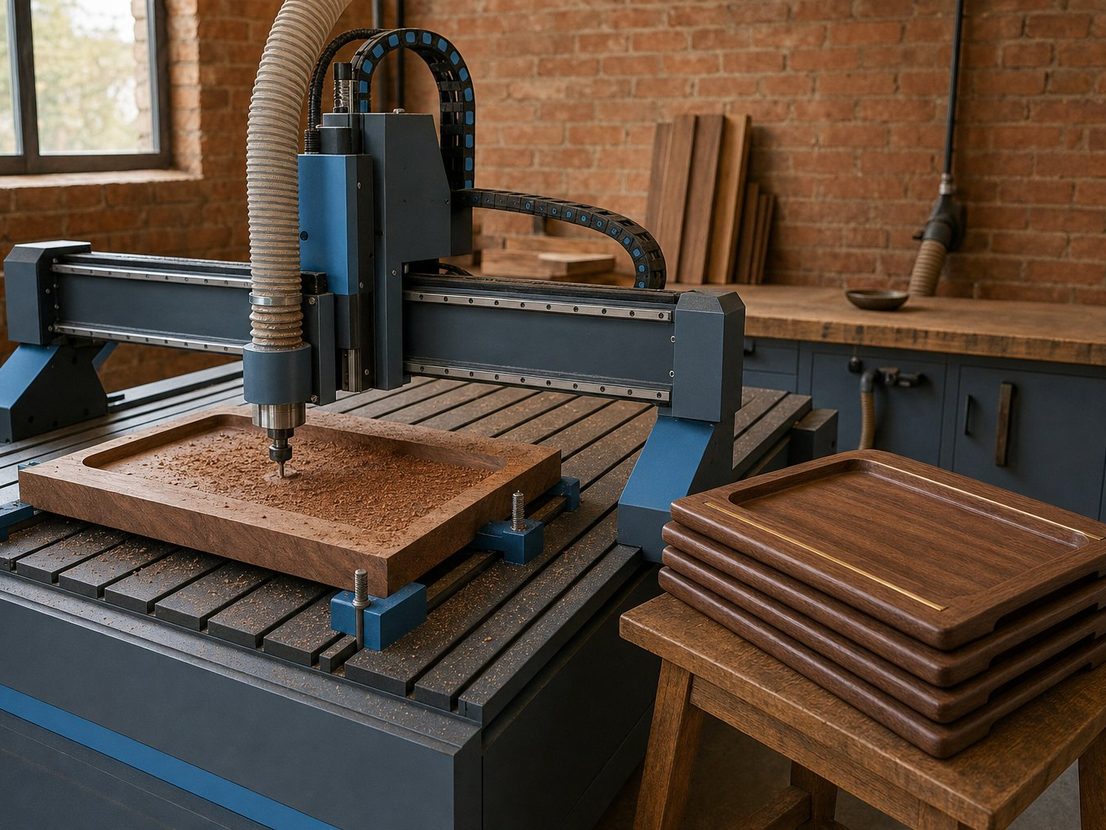
The Veld Tray is a hardwood tray with fine brass inlay lines. It needs clean pockets and crisp inlay channels every time, across runs of forty or fifty for a lodge dining room. We now cut them on a full bed CNC router. A whole slab is clamped down, pockets and inlay grooves are cut in one setup, and the trays go straight to the oiling bench.
Johan keeps a dedicated set of router bits for hardwood only, so the brass channels stay sharp edged and the inlay sits flush without a second pass by hand.
Karoo Screens and Baobab shades on the CO2 laser
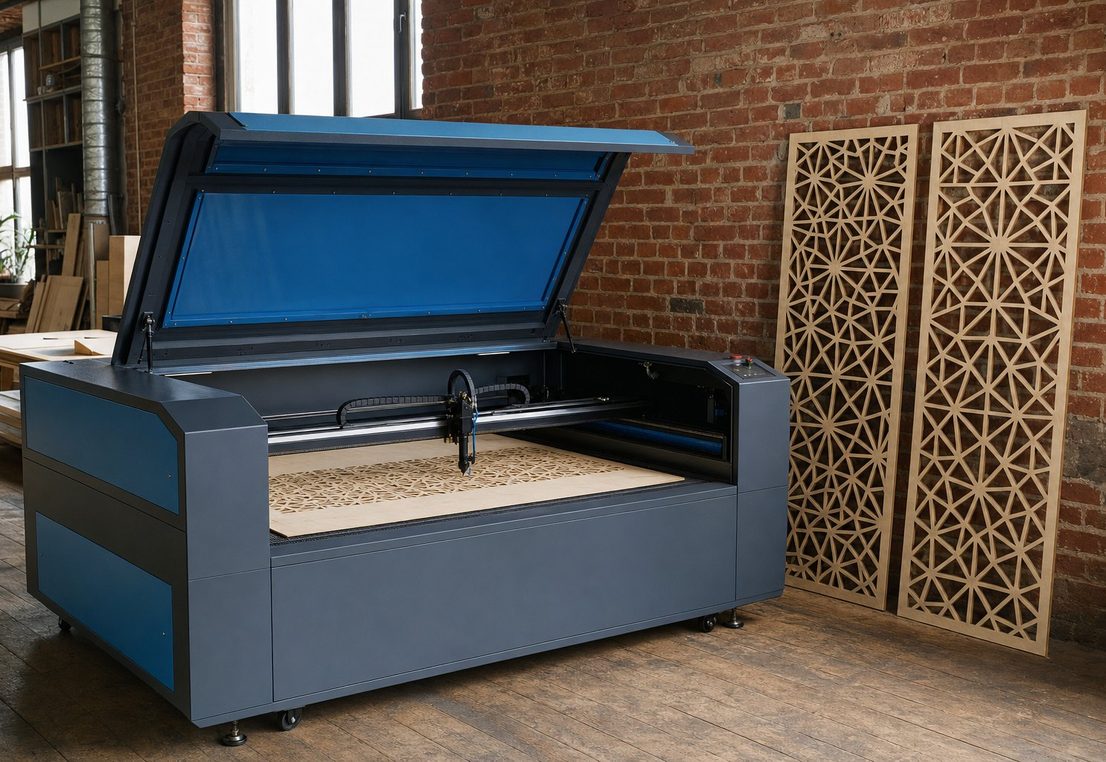
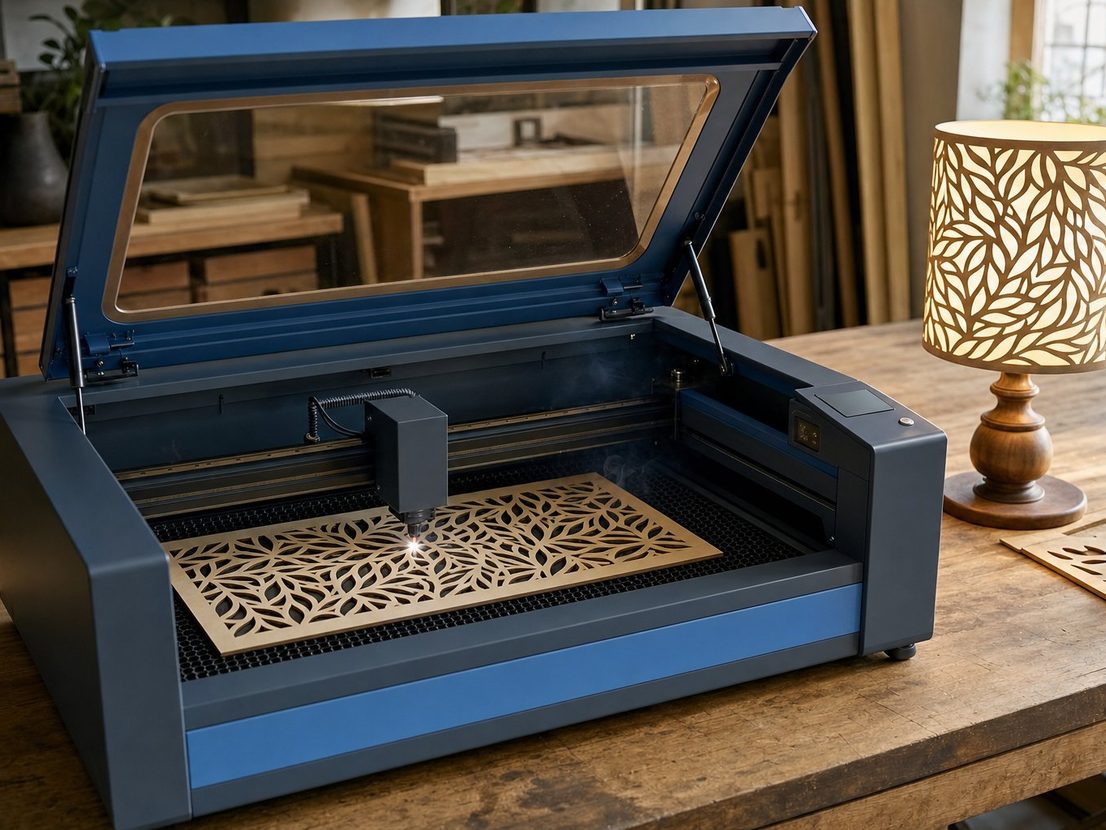
The Karoo Screen’s perforated motif and the Baobab Lamp’s canopy shade are both laser work. We run them on a CO2 laser, with a spare laser cutting board kept ready so one sheet loads while the next is cutting.
For the Baobab shade, density is everything. Too open and the bulb glares, too closed and the room goes dim. Being able to test five shade densities in one afternoon is what finally let us publish our canopy light notes for specifiers.
“Our partner studios send me patterns at all hours. Now I can tell a maker the sample will be cut on Tuesday, and mean it. That trust is worth more than any single machine spec.”
Sizwe Mthembu, Collab lead, Durban
A benchtop CNC for the school maker week
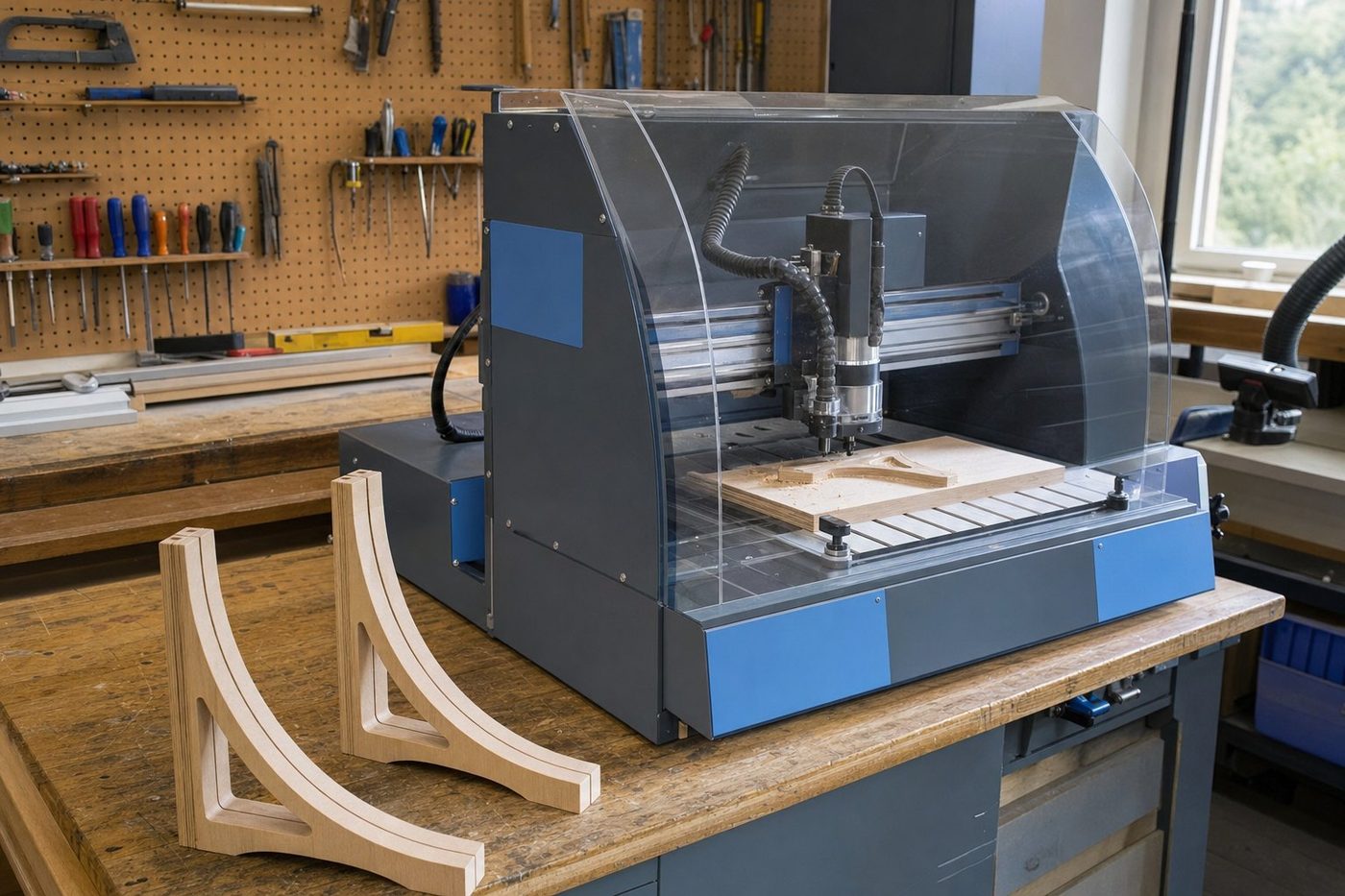
For the Pretoria school maker week we needed a machine learners could watch safely and teachers could run without a full workshop crew. A compact desktop CNC router from AM.CO.ZA now travels with our jig kit. It cuts shelf brackets and small parts from marine ply while the class assembles at the benches.
“Teachers want to know two things, is it safe and who do I call. With AM.CO.ZA behind it the second answer is easy, and that makes the first conversation much shorter.”
Hendrik Lourens, Installation lead
What changed on the floor
- Veld Tray runs went from weeks of waiting for outside machine hours to a planned production slot in Woodstock.
- Karoo Screen and Baobab shade samples are cut in house, so partner studios see their patterns in days.
- The school maker week runs on its own machine, so studio production keeps going while we teach.
We still make every object with the same southern African studios and makers. What changed is that the machine time is ours now, backed by a partner we trust. More of our work is on the projects page. How we keep these machines cutting cleanly is in our ledger essay Keeping the cut clean.
Planning a fabricated piece?
If you are briefing trays, screens, lamps or shelving for a lodge, gallery, school or home, send the atelier a note through our contact page with the piece name and your city. If you are a maker setting up your own CNC or laser bench, have a look at what AM.CO.ZA offers. It’s where our own machines came from.
What our Design and Fabrication customers say
Verified Google reviews