
Knysna
Knysna cultural venue
Map cabinet and foyer marks for a cultural hall.
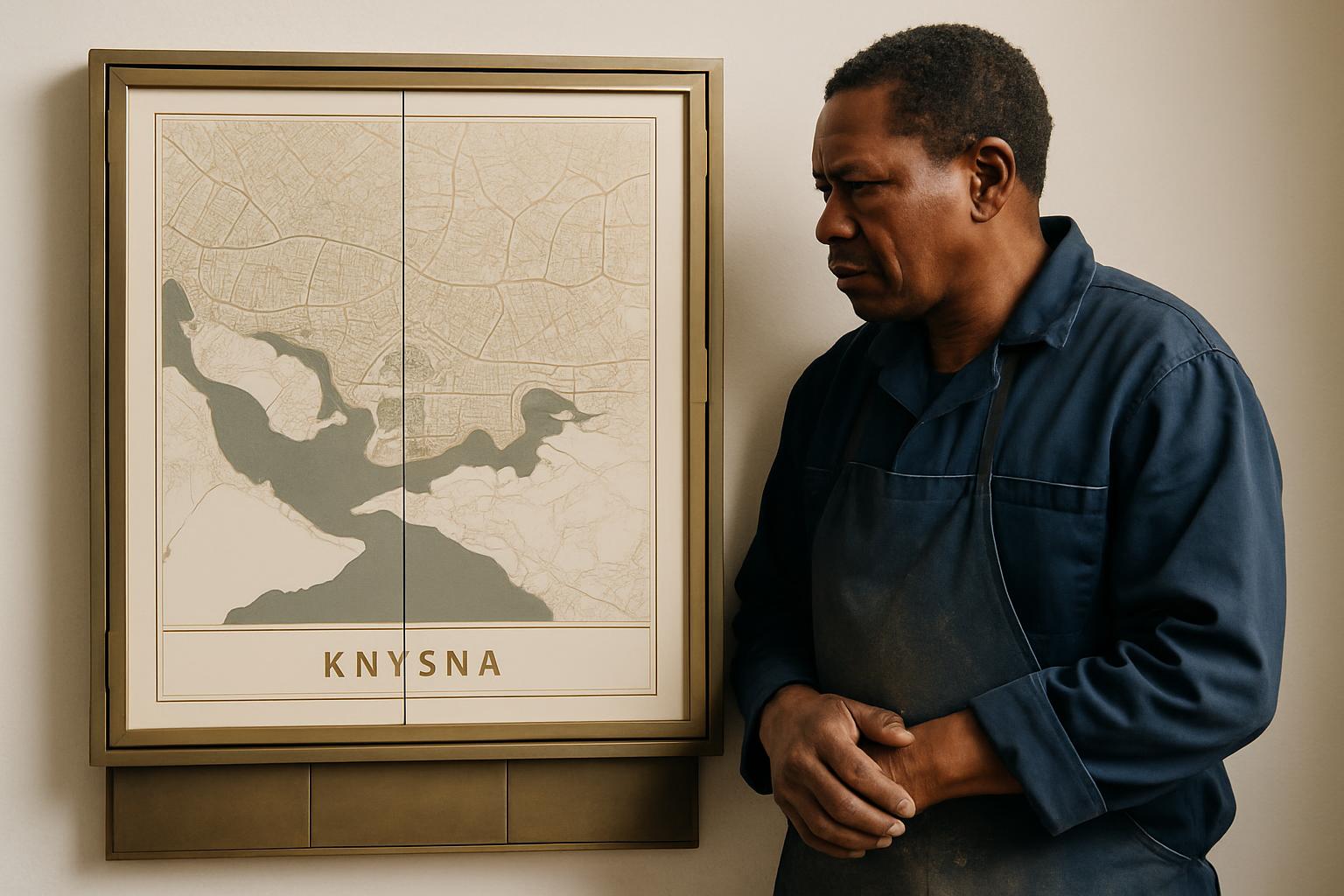
Site notes and initial brief: knysna Map Cabinet and Foyer marks
The cultural venue in Knysna called for functional, tactile pieces that could also orient visitors arriving for performances and exhibitions. The brief was to create a map cabinet for the south wall of the foyer and permanent marks for the entrance area. The map cabinet needed to house archival prints, brochures and tactile maps, so we worked around a fixed alcove, 1.8 metres wide, with low ambient light and heavy visitor traffic. Knysna's damp, coastal air meant we had to think carefully about joinery and finishes. Timber movement and potential rust were concerns from the outset. The foyer, with its terracotta tiles and high ceilings, called for a plinth that could survive shoe scuffs and occasional water tracking in after rain.
Access for delivery was by a side lane, meaning everything had to fit through a 900mm door and be light enough for two people to carry. Our team visited during the tail end of a berg wind and saw how quick temperature swings affected the interior. We opted for a locally sourced hardwood, finished with a marine-grade oil that could be refreshed seasonally. Fittings were solid brass, hand-patinated in the Woodstock studio, then waxed to slow oxidisation in the Knysna humidity. The foyer marks used 6mm brass, flush-set into the tile grouting.
What worked and became part of our Studio practice
Several methods and details trialled in this project ended up finding their way into later jobs. The mix of local timber finished with oils that stand up to humid conditions has since become our go-to for coastal sites. Hand-patinated brass didn’t show fingerprints or water marks as much as we feared, and the tactile feel was appreciated by visitors using the map cabinet. The shallow plinth design with rounded edges made cleaning easier for venue staff, and the flush-set foyer marks have been robust under foot traffic.
- Marine-grade oil finishing for timber in high-humidity regions
- Hand-patinated, waxed brass for high-touch points
- Shallow, rounded-edged plinths for ease of cleaning and safety
- Flush-set brass marks in high-traffic tiled foyers
Reflections and adaptations for future work
On reflection, we’d change a few practical things. The cabinet’s lower drawer could have had a deeper front lip to help keep maps from curling up in the damp Knysna air. We’d also pre-fit some of the brass marks at the studio, as the tile joints on site were less even than expected, which slowed installation. For the next job, we’d allow for a little more play in the cabinet’s back panel so it can breathe as the timber swells and contracts through the seasons. The delivery access also reminded us to modularise larger pieces for easier carry in tight corridors.
- Deeper front lip for lower map drawers to prevent curling
- Pre-fit brass marks to adjust for uneven tile joints
- Looser back panels for timber movement in coastal climates
- Modular designs for easier delivery through narrow doors