
Cape Town
Woodstock gallery editions
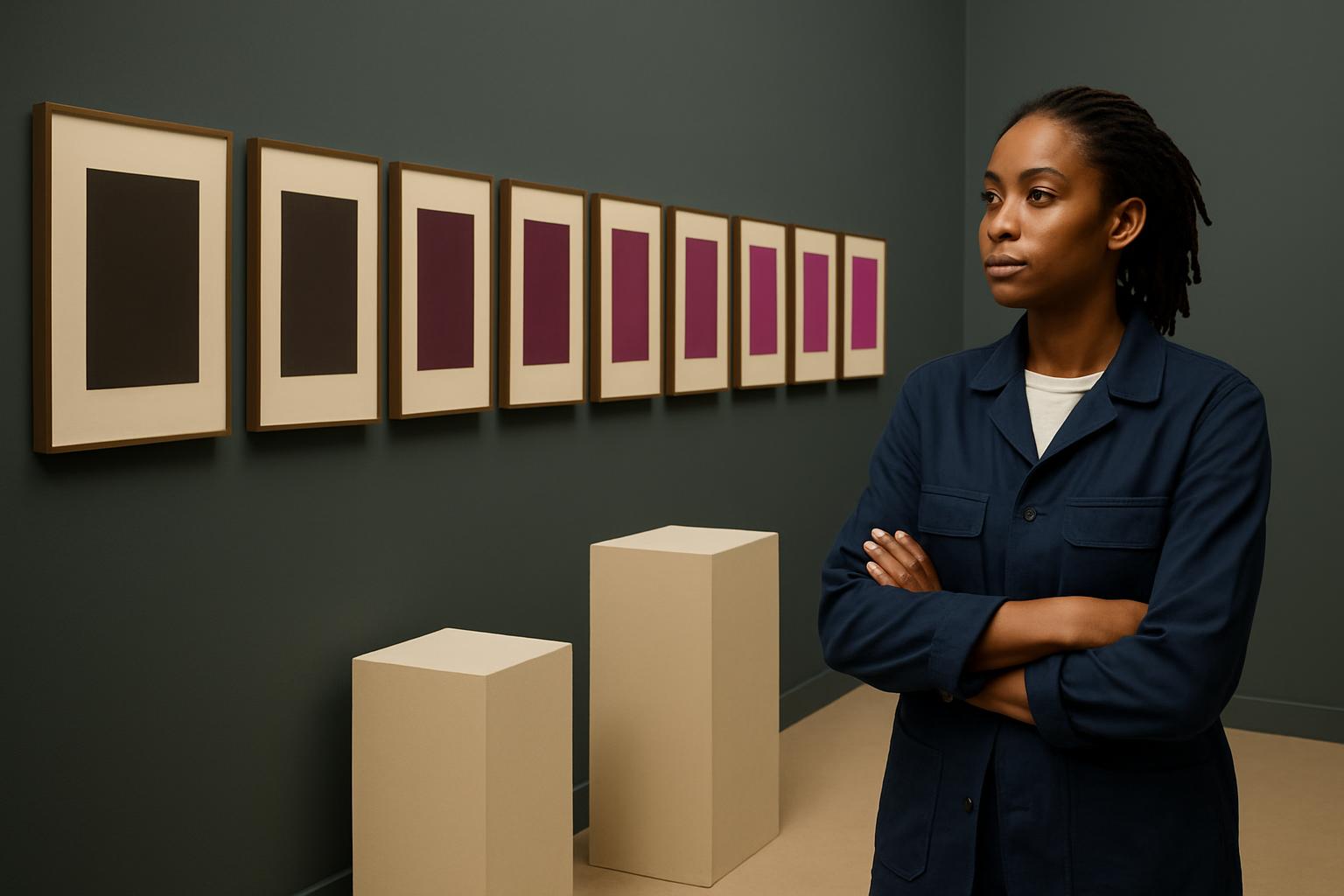
Textile panels and plinths for a Woodstock gallery shop week.
Field notes on the Woodstock gallery shop brief
For the gallery week in Woodstock, our task was to produce a set of textile panel frames and custom foyer plinths that could stand up to the foot traffic and shifting light of a city-facing exhibition space. The brief included creating light but sturdy frames for a series of dyed and handworked textiles, along with plinths for journal boxes and small objects, all intended for daily use and repositioning. The shop area sat just back from Albert Road, with high windows letting in plenty of morning sun, so we aimed for finishes that wouldn’t bleach out or mark easily.
We worked with South Coast kiaat for the frames, pairing it with inset birch ply backing to keep the weight down while preserving a clean edge on the front. For the plinths, we used hand-scrubbed ash with a white hardwax, cut to 900 x 350 x 350 mm, so they could stand independently but move easily between displays with one or two people. The main challenge was the uneven concrete floor, typical of older Woodstock buildings, so we added small adjustable feet to keep the plinths stable and level wherever they landed.
Humidity from the Cape autumn brought some surprises, with textile panels tending to slacken. We responded by tensioning each panel with a discrete cord system fixed behind the frame, allowing easy tweaks on the morning before opening.
What worked and influenced later jobs
Several solutions from this gallery edition have proven useful in later work, especially for other shops, cafes and foyers. The combination of lightweight frames with robust corner joinery allowed for frequent rehanging with minimal wall damage, while the cord tensioning system ensured that textile artworks kept their shape well, even in changing humidity. The adjustable plinth feet, originally improvised for this venue, are now a common detail in our display forms for uneven floors across the region.
Our finishing method on the ash plinths also held up to fingerprints and the odd coffee spill during setup, so that blend of hardwax and careful grain selection is now standard for gallery and foyer pieces.
- Lightweight textile frames with strong corner joints
- Cord-based tensioning system for textile panels
- Adjustable feet on plinths for stability on rough floors
- Durable hardwax finish on ash, resilient to marks
What we would change next time
While the display units met the practical needs of the gallery shop, there are a few tweaks we would make for the next run. The plinths sat well visually, but a slightly higher profile could give more presence for smaller objects, especially in a busy retail-type setup. In future, we would build an extra 40 mm into the height and test a slightly flared foot for extra stability when bumped by shopping bags or backpacks.
Installation could have run smoother with a template for wall hanging positions, especially as the lintel heights varied between bays. Next time, a simple paper guide for each batch of textile frames would speed up marking out and keep lines crisp, even with a quick turnaround.
Finally, we’d recommend pre-finishing the frame fixing points with a little brass cap or washer to avoid wear over time, especially when frames are hung and re-hung for changing displays.