
Studio
Gallery shop
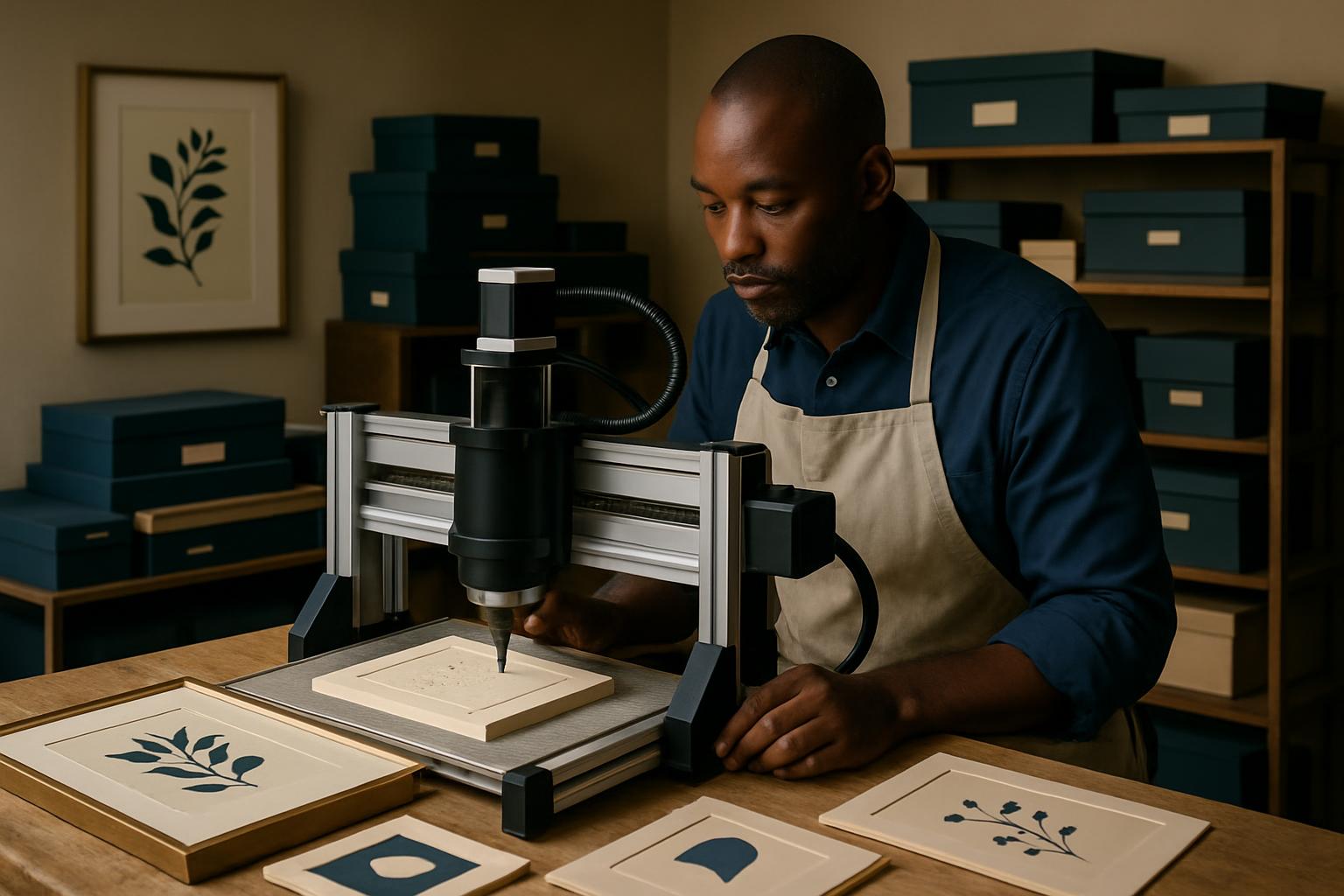
Small editions and panel frames for gallery shop floors in Cape Town and Joburg.
Outcome
Shop stock that still reads as craft.
Steps
- Measure shop bay
- Choose edition count
- Tag with maker mark
Visit sequence: outfitting gallery shop floors
Morning in Woodstock means firing up the laser and loading up the bakkie with frames and plinth samples. Our first stop is the Cape Town gallery shop, usually before the foot traffic starts. We start by measuring the shop bay: wall heights, floor clearances, the awkward pillar near the rear, and how much sunlight creeps in through the glass. Next, we sit with the gallery’s team to decide the edition count for the current cycle. We test how many Textile Panel Frames fit in the space while keeping sight-lines open, then check where a Journal Box Edition or two could live at the counter.
After lunch and a drive up the N1, it’s time for a Joburg stop. Here, humidity and dust are different, so we check frames for warping and ease of hanging. We confirm that all plinths are level on the tiled floors. For every piece, we tag the wood or steel discreetly with our maker’s mark, never too prominent, always there if you know where to look. Before leaving, we do a final walkabout with the gallerist, checking that stock feels like craft, not catalogue. We pack up, make notes for the next drop, and head back to the atelier to review feedback.
Checklist: keeping a gallery shop stockout smooth
A gallery shop can be a puzzle of small spaces and shifting stock, so we rely on this checklist to keep us sharp. Each point matches a moment on site, cutting down on surprises and keeping the presentation tight.
- Double-check bay measurements and floor plans before arriving
- Confirm edition count and frame type with gallery rep on site
- Inspect all Textile Panel Frames and plinths for finish and join integrity
- Tag each object with our maker mark after assembly
- Photograph final layout for our reference
Common pitfalls and how we catch them
It’s easy to misjudge a bay’s size, especially with Cape Town’s quirky nooks or a Joburg shop’s high ceilings. We always bring a digital tape and double-check on site rather than relying on old floorplans. Another frequent hiccup is missing the right edition count, so we confirm on the day with the gallerist, rather than trusting email threads. Tagging with the maker mark can be forgotten in the scramble of a busy drop-off, so we set aside time for it after assembly, never before.
Frames or plinths can arrive with minor knocks from transit, especially after a long trip up the N1. We keep touch-up oil, wax, and felt pads in the kit bakkie. If something isn’t right, we’ll swap it out or repair on the spot. Stock should always read as craft, never rushed, never mass. If you want to chat about a gallery shop fitout, we’re ready on atelier@creationafrica.co.za.