
Studio
School maker week
Safe fabricate weeks with benches and jigs for school studios.
Outcome
A maker week that finishes on Friday.
Steps
- Brief teachers
- Set bench count
- Share jig files
School Maker week: day-by-day sequence
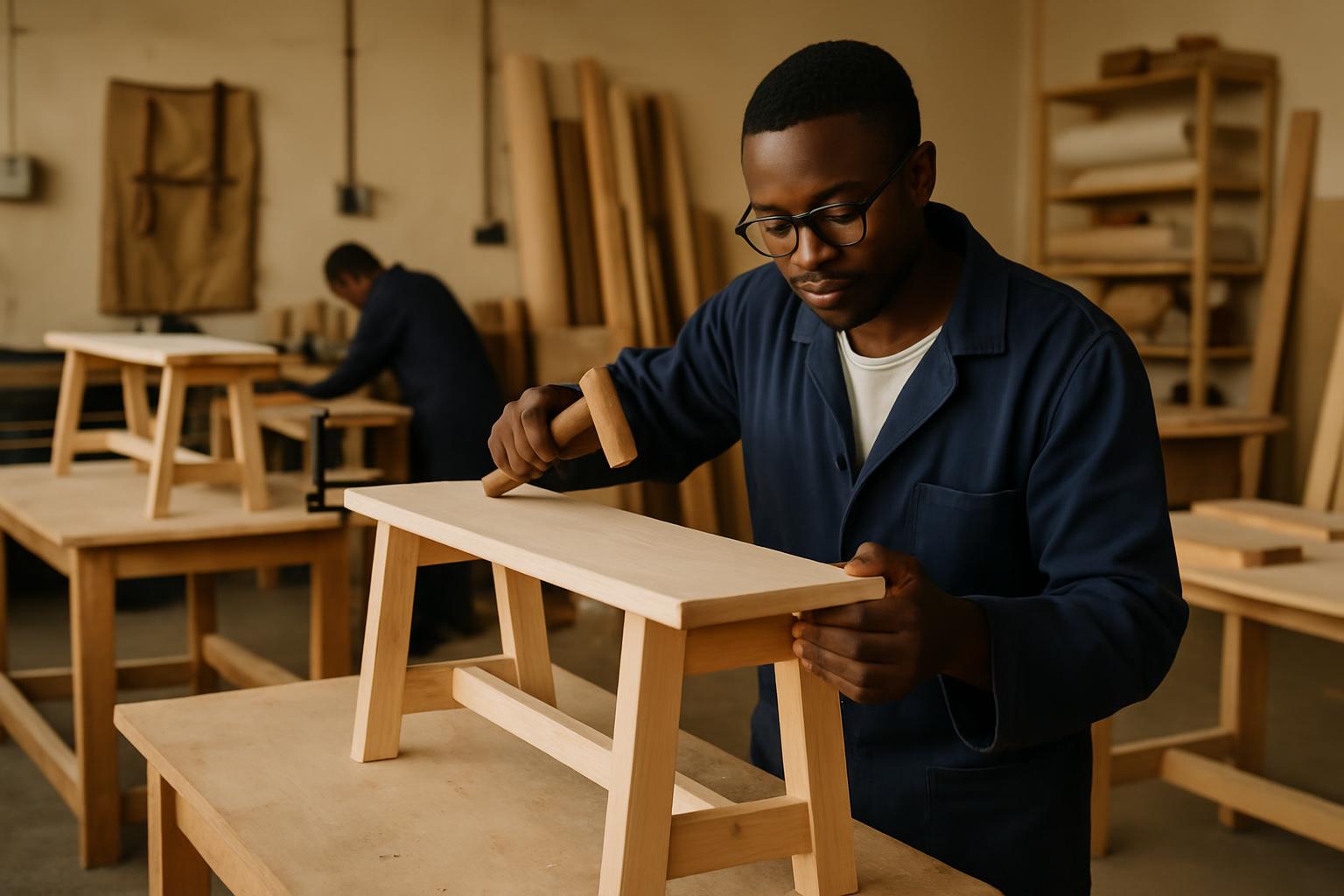
On Monday, we arrive early to brief the teachers and school maintenance staff in the studio space. Together we walk through the week’s plan, confirming safety steps and access, and double-checking the number of students per group. We unpack Studio Benches and set them out, making sure each is stable and level, ready for the week’s hands-on sessions. Ceramic Studio Jigs are laid out along one side, and we demo their use for any staff unfamiliar with the process.
Tuesday and Wednesday are about getting hands moving. Students are split into teams, rotating between woodworking and ceramics sections. We guide the first sessions, showing how to use the Veld Tray CNC jigs for hardwood, and sharing techniques for reliable, repeatable cuts. The open jigs for ceramics let everyone start their vessel or plate blanks with the same starting point, avoiding confusion and wasted material. Staff keep an eye on safety and tool use while we circulate to answer questions and adjust jigs as needed.
By Thursday, learners are working more independently, using the benches for both making and reflecting. Any issues with tool wear or jig accuracy are fixed on the spot. Friday is clean-up, finishing, and a final session where everyone sands, oils, and lines up their trays and ceramics for display. We end the week with a tidy studio and a sense of achievement, ready for the next class or residency.
Checklist: keeping the week on track
To make sure your school maker week runs smoothly and safely, we follow a simple but thorough checklist. This keeps the energy up and the mess down.
- Brief all staff and students on safety and tool handling first thing.
- Count and inspect all Studio Benches before sessions start.
- Share and demo ceramic and CNC jig files with teachers and learners.
- Check all fixings, clamps, and tool edges daily for wear or damage.
- Log each group’s progress and flag any bench or jig issues for on-site fixes.
Common pitfalls and how we catch them
The most frequent trouble is benches arriving in the wrong quantity or the school underestimating class size, which can lead to crowding and lost time. We avoid this by confirming bench numbers during teacher briefing and bringing a spare on the bakkie if there’s any doubt.
Another snag is unfamiliarity with new jigs, especially the CNC and ceramic formats. We always run a hands-on show-and-tell on day one, and leave printed step-by-steps next to each setup to keep things moving if the group changes.
Lastly, dust and tool wear can creep up by midweek, especially when working with local hardwoods. Our team checks clamps and edges each afternoon, swapping out anything tired to keep sessions safe and smooth. If anything goes astray, a quick call or email to atelier@creationafrica.co.za brings us or a fix in by the next morning.