
Mr Thabo Nkosi
Collab frames that travel
How textile panel frames ship between Cape weavers and Joburg galleries.
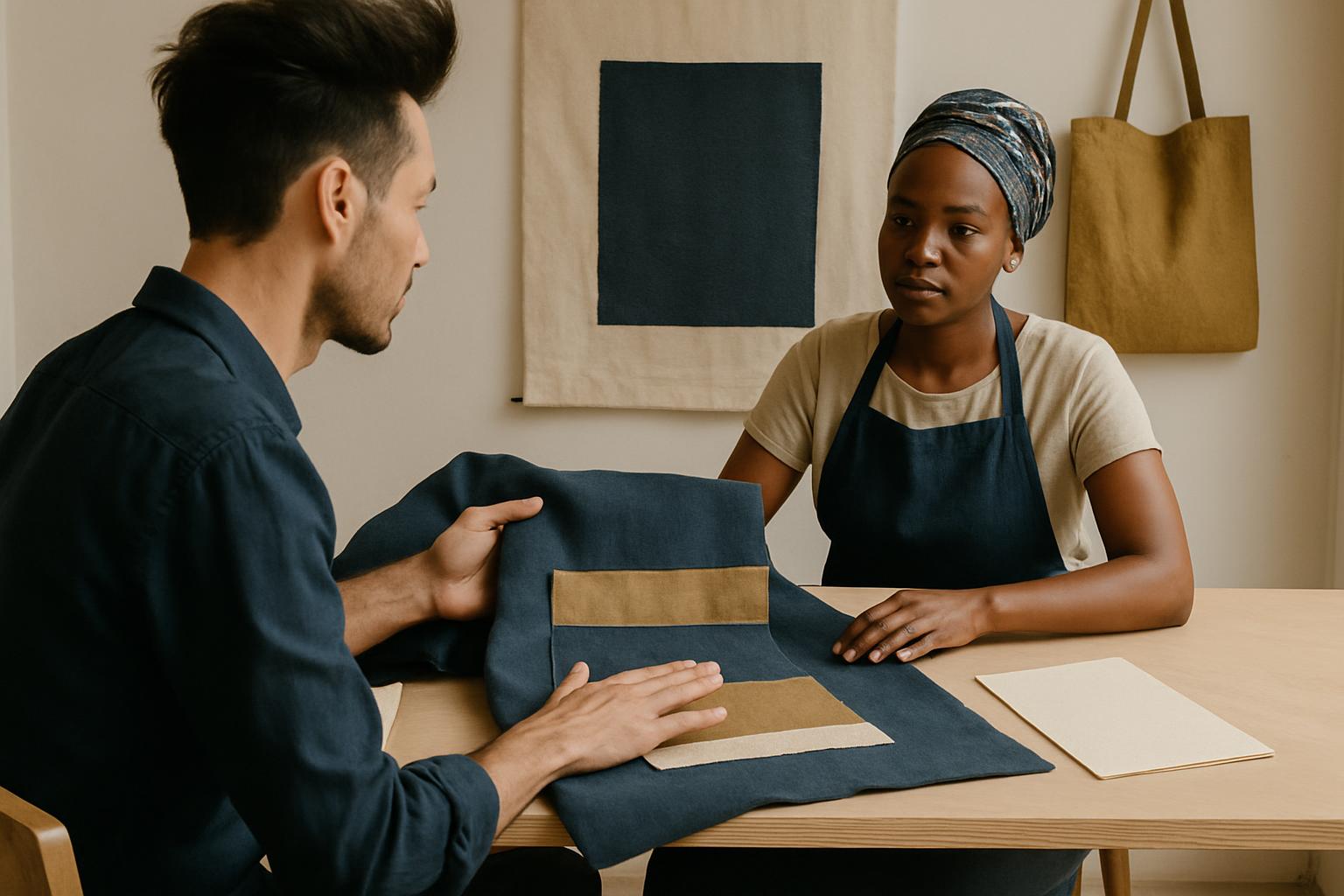
When a Cape Town weaver phones us about a new textile, my first thought is not just about colour or weave, but how we’ll get the finished panel framed and up in a Joburg gallery without trouble on the N1. Our collab frames have learnt to travel: robust enough for a bakkie, yet refined for the white cube.
Read it alongside the Textile Panel Frame page.
Birch and Brass: Frame construction for movement
We start with a birch ply frame, laser cut in Woodstock to fit the panel’s dimensions. Birch takes well to laser work, giving a crisp edge you need when textiles are involved, and it holds up to repeat handling better than softer timbers. We then add a slim brass rod as a top rail, which is more than just a nod to Joburg’s taste for metal accents. Brass resists tarnishing in the Highveld air, and it’s got a springiness that means the panel hangs straight, even if it’s been rolled up for the courier. Maker marks are etched on the reverse, so the collab story is always there, just not shouting in the gallery.
Every frame is finished with a light oil, hand-rubbed to bring out the grain and seal it against dust or a sudden waft of Durban humidity. We’ve learnt never to skip this: an unoiled frame will suck up fingerprints during handling, and gallery staff notice.
Travelling the N1: shipping from Cape to Joburg
A lot can happen between Woodstock and a Parkwood gallery. We’ve seen boxes left in the sun on a stoep, frames dropped off a tailgate, even the odd crate left overnight in a storm. To counter this, we build custom double-wall cartons, with dense foam corners and a breathing gap around the frame. The textile panel itself is rolled around a soft core and suspended inside, never folded. This stops sharp creases and keeps the weave’s structure intact, even if the bakkie hits a pothole near Bloemfontein.
One lesson learnt: never pack with bubble wrap directly against the oiled birch. It sweats and leaves a print. We always use acid-free tissue, then foam, then box, with ‘UP’ stickers both sides. It seems fussy until you’ve seen a warped rail or a smudge on a white weave.
Gallery hand-off: getting the Panel ready to hang
Once in Joburg, the gallery team doesn’t want to faff with tricky installs. We supply the frame with a discreet keyhole slot and a paper template for fixing. All they need is a tape measure and a drill, which most have on hand. The brass rail slots in with a satisfying click, and the panel’s velcro tabs marry up with the strip we stitch into the frame’s back channel.
We also include a care card, reminding teams to dust the birch and polish the brass with a dry cloth only. Oils or sprays leave streaks, and we’ve had to sand back more than one frame after an overly eager cleaner went at it with furniture polish.
Mistakes spotted, lessons learnt
Mistakes are part of the journey, and we keep a mental tally to refine each collab shipment. The biggest headaches have come from:
- Incorrect panel measurements sent from the weaving house, leading to frames that don’t fit, always double check on site, not over the phone.
- Frames stored in direct sun, which warped the birch. Now every frame ships with a ‘no sun’ warning and a phone call to the gallery team.
- Lost maker tags, we now laser the mark in, instead of using a glued brass badge, which once came off in a KZN summer.
- Velcro stitched too close to the edge of heavy panels, causing sagging. We now space the tape in from the edge and specify a maximum panel weight per frame size.
- Late courier pickups before a public holiday, with crates sitting too long at a depot. We organise shipments midweek and track every one, calling ahead to the gallery for confirmation.
Where to go next
See the Textile Panel Frame specs, then the install notes. For a full room brief, the Gallery shop or Brand collab studio pages walk through a visit week. Finish samples live under finishes, and you can book a sample hour at a showroom.