
Ms Zanele Mokoena
Southern route notes
How we keep collaborating studios visible on one cabinet top.
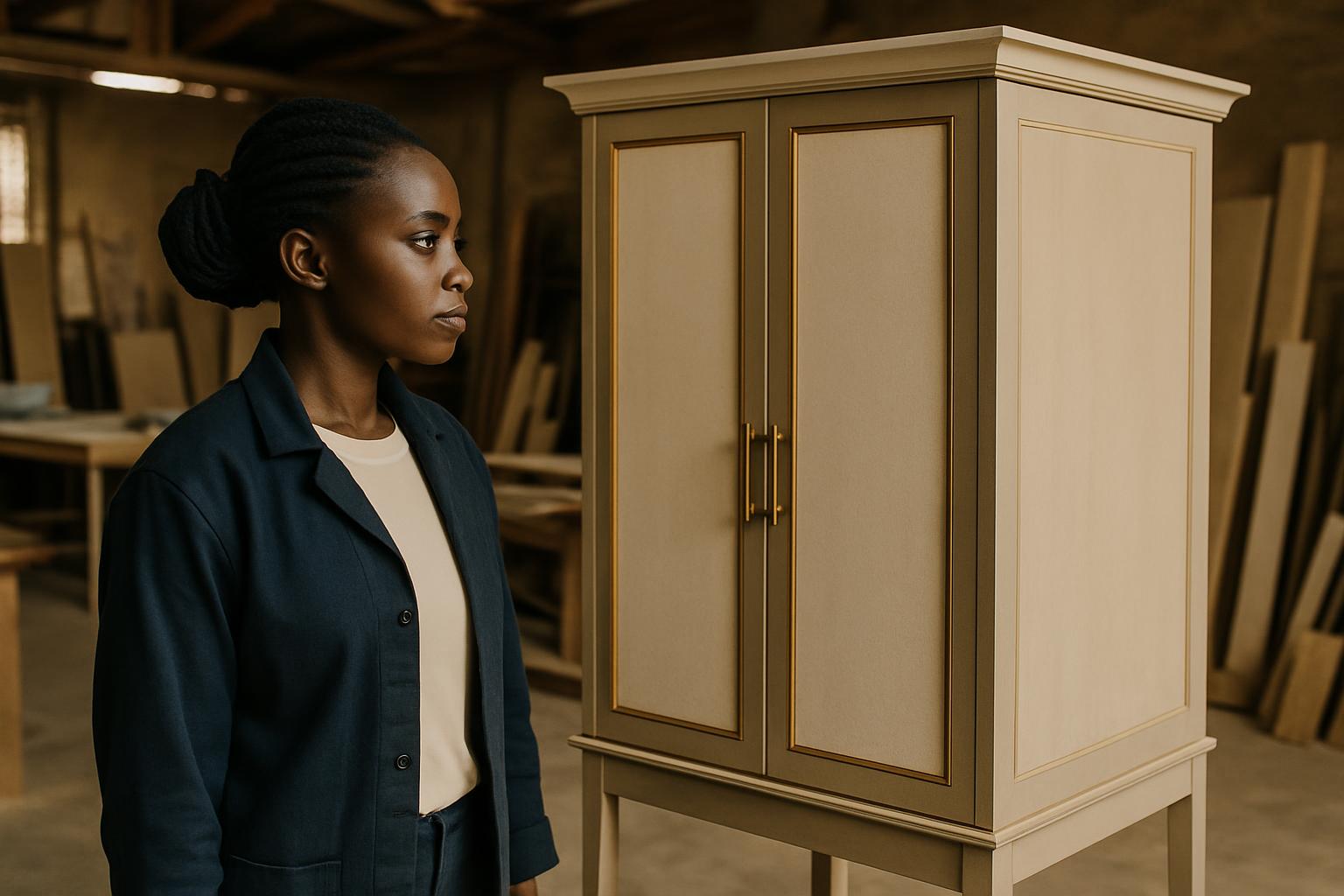
In our Woodstock atelier, collaboration means more than just shared space. I have learnt real visibility starts with what sits on our Map Cabinet South, right in the thick of sawdust and sketches.
Read it alongside the Map Cabinet South page.
Why a Map Cabinet anchors our network
The Map Cabinet South is no ordinary storage. We designed it shallow on purpose, because thick drawers swallow things and stories. The four drawers hold old route sheets, studio maps, samples and correspondence from upcountry, each one an open thread in our maker network. Plywood keeps it resilient without looking too precious, because every so often someone leans too hard or wheels in a crate.
I insisted on a glass top so nothing is hidden. From staple holes to a folded Karoo route napkin, every layer visible underneath becomes part of the conversation. On Monday mornings, you will spot a map with a scribble from Joburg, next to a swatch from a Durban ceramicist, all out in the open for visitors and the team alike.
Why we keep it on top, not in digital files
It is tempting to scan, store and forget. Yet the real weight of collaboration is tactile. The cabinet’s surface lives with spillover: test tiles from partners, offcut tags, a bakkie delivery slip from the Lowveld, someone’s charcoal sketch of a pendant idea. These are not precious archive items, but living notes, meant to be handled and moved around.
A digital folder is neat, but it cannot let you pick up a brass pull and remember the conversation about humidity in Durban affecting finish. Keeping these things on the glass top means everyone passing by stops, checks, and sometimes adds their own scrap or suggestion.
Mistakes we have seen and what works better
Before this system, we kept studio collaborations in ring binders and heavy steel units. What followed was simple: out of sight, out of mind. Partners would come in with stories and samples, but they would be swallowed by the cabinet’s belly and only rediscovered much later, sometimes too late to act on a new opportunity.
We also tried noticeboards, but Cape southeaster is unforgiving, blowing sketches off and scattering samples. With the Map Cabinet South, everything is weighty enough to stay put, yet visible under glass. If something needs fresh attention, it moves to the very centre. This prioritises action without any confusion.
How we use the Map Cabinet South in our day-to-day
Our team treats the cabinet as a living table of contents for all ongoing collaborations. Each drawer is clearly labelled, with brass pulls so even visitors can open and browse without fuss. On Fridays, we do a quick review: what is piling up, what has gone quiet, what needs to be moved from the top to a drawer, or vice versa. If a sample from a Lowveld partner needs a decision, it stays in full view until sorted.
We wipe the glass down weekly, keeping fingerprints and sawdust at bay. Every now and then, a visiting maker adds a sketch or note straight onto the glass with a whiteboard marker. These are left up until the next review, sparking new conversations and keeping the cabinet’s surface as active as our email inbox.
- Rotate the content on top regularly: nothing lives up there forever.
- Label all incoming samples with date and studio name, using a pencil for easy edits.
- Keep a small tray for loose items, so nothing slides off if the table gets bumped.
- Encourage all collaborators to add one physical note or sample each visit.
- Use shallow drawers only, deep ones invite neglect.
Where to go next
See the Map Cabinet South specs, then the install notes. For a full room brief, the Cultural venue or Embassy gift studio pages walk through a visit week. Finish samples live under finishes, and you can book a sample hour at a showroom.