
Studio
Cafe objects
Trays, shelves, and small lamps for Cape and Joburg cafes.
Outcome
Cafe forms that survive service.
Steps
- Count covers
- Pick tray stack
- Confirm oil finish
The visit sequence: outfitting cafes with forms that last
Our day with a Cape or Joburg café usually starts before the first cortado is poured. We walk the floor with the owner, counting covers in and out of the main service area, checking where regulars roost and where the quick turnover seats are. This tells us how many Veld Trays need to circulate, and which tables demand a Harbour Shelf tucked in for condiments or specials. In the back, sometimes a Baobab Lamp lands in a reading nook or near the front window for softer evening light.
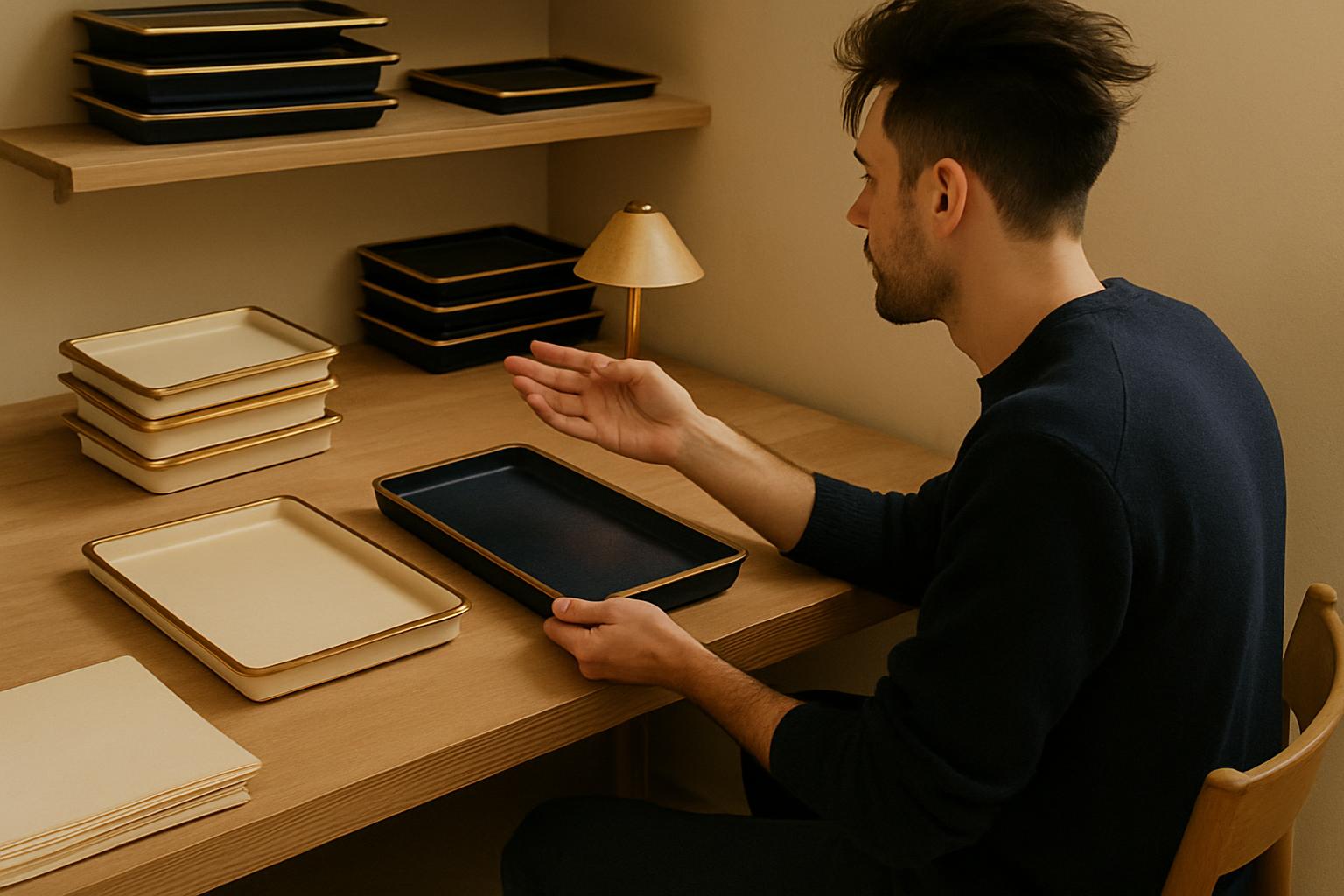
Once we have cover numbers, we show a few tray stack heights, the way a Veld Tray holds its shape even after a long day of sarmies and carrot cake. Some cafes prefer a low stack of six for tight spaces, others go for ten so baristas are never left tray-less during a mid-morning rush. We set these out in the actual kitchen or pass, so the fit and grip are clear.
Final step: confirming finish. Most cafes want a food-safe oil seal that’s easy to wipe after sticky slices or a hurried espresso spill. We bring along finish samples, pointing out the difference between an oiled oak and an oiled ash Veld Tray, or a marine-grade varnish for Harbour Shelves in a Durban humidity hotspot. When the owner signs off, we book in the build and delivery to slot in before the next busy weekend.
Checklist for a smooth café fit-out
A few essentials keep the café fit-out on course. We use this checklist in the studio and on-site so nothing slips through in the morning rush.
- Count covers for all seating zones, including stoeps or outside benches.
- Measure pass widths and shelf spots with a tape for accurate tray sizing.
- Test tray stack with the actual crockery used by your café.
- Confirm oil or varnish finish type with a physical sample.
- Schedule delivery when the kitchen is quiet to avoid service disruption.
Where café jobs go wrong and how we catch it
For café forms, the most common slip is underestimating the actual number of trays needed for peak times, especially if there’s a braai room or a stoep that fills up on weekends. We check the cover count against the register for a full week, not just a quiet Tuesday.
Another pitfall is mismatched finishes. A shelf that looks fine in the studio can go sticky or lose its colour when faced with Cape southeaster or Joburg’s dry winters. We insist on testing our finish samples in the actual café space, leaving them overnight near a window or coffee machine to see how they take real-world knocks and spills.
Delivery timing can also be a headache. We’ve learnt to organise drop-offs outside of breakfast, so trays and shelves arrive when the team can unpack and check things over before the first regulars walk in. Any snags, we fix quickly, contact us at atelier@creationafrica.co.za and a bakkie will be there, even if it means a sunrise drive through the Karoo.