
Studio
Editorial feature
Press and ledger features with journal boxes and photographed forms.
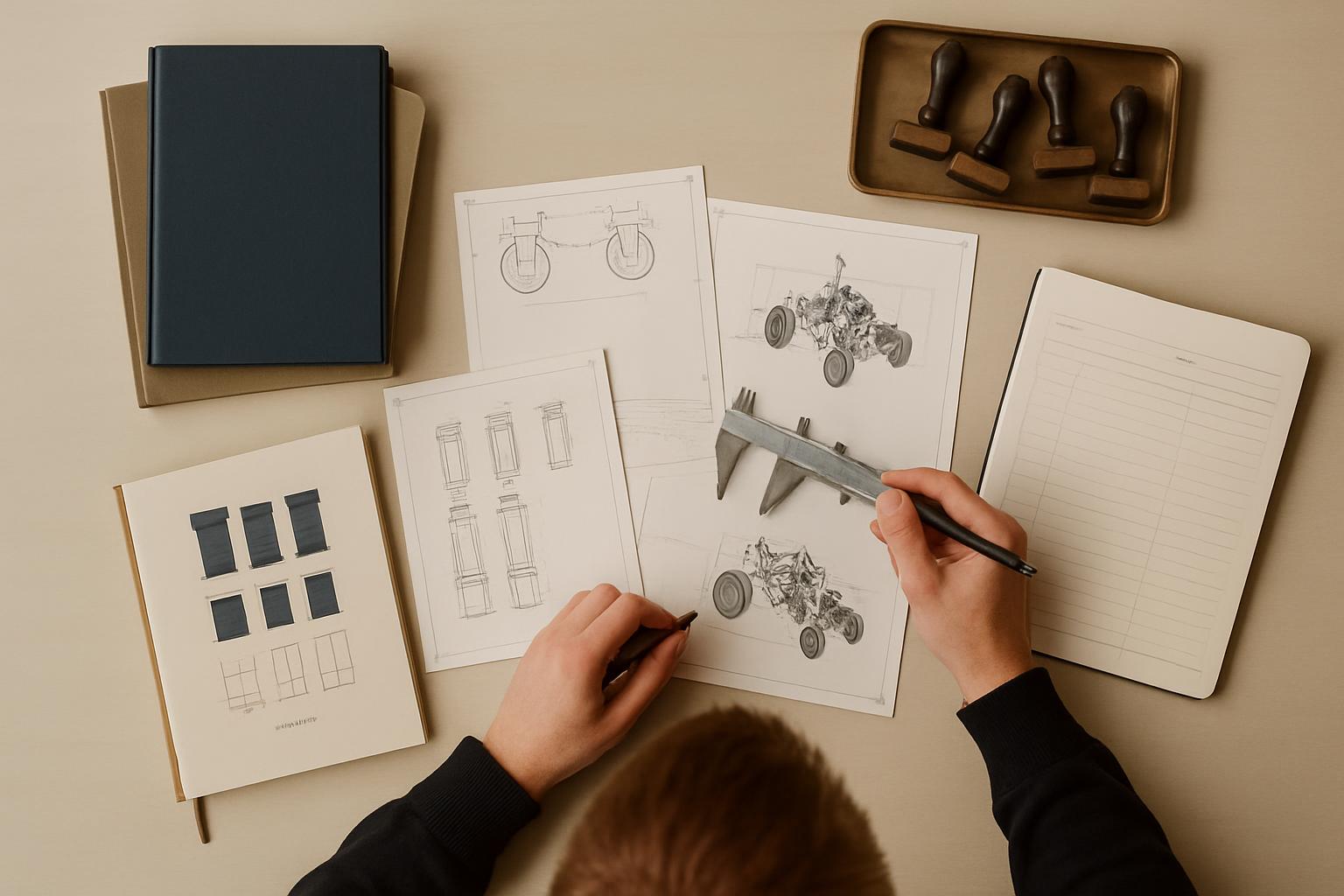
Outcome
A feature that travels to showrooms.
Steps
- Pick issue theme
- Box the forms
- Shoot under brass light
Visit sequence: editorial feature preparation
An editorial feature day at our Woodstock atelier shifts from quiet planning to a focused hub of making and staging. We begin by gathering around the main table, where the team settles on the issue's theme. This could be anything from the textures of the Karoo to the play of Cape winter light, whatever feels resonant and timely. The chosen theme guides every hand that day, from the studio manager to the finisher oiling timber in the back.
Once the direction is set, we carefully select and box the forms, these are the pieces that will travel to our showrooms and often feature in the press. For example, a Veld Tray or a Baobab Lamp is wrapped in recycled felt, then secured inside a Journal Box Edition. Each object is checked for finish, patina and joinery before it leaves the atelier, since these features are scrutinised under the camera flash and editorial eye.
When daylight begins to shift, we stage and photograph the boxed forms under our brass pendant lights. This is when the subtle details shine: the fine brass inlays of the Veld Tray, or the way light bends through the laser-cut shade of the Baobab Lamp. The journal boxes are stacked with tidy precision, ready for delivery to the next showroom stop, whether Rosebank or the Waterfront. Our journals and forms are always sent with a note on the provenance of each piece, something our media partners say helps their readers understand the process behind the product.
Checklist: editorial feature day
To keep the editorial feature process smooth, we stick to this checklist rooted in daily practice:
- Confirm the editorial theme with all team members by 09:00.
- Inspect and select forms: ensure Veld Trays are sanded, Baobab Lamps tested, and Journal Boxes labelled.
- Pack each object using recycled felt and a secure fit inside each Journal Box Edition.
- Set up the photography area under the brass pendant with clean backgrounds and correct bulbs.
- Prepare provenance cards and notes for each boxed edition heading to showrooms.
Where it can go wrong and how we catch it
The most common stumbling block is mismatched forms and themes, especially if the team rushes the morning brief. An unrelated object can slip through, which muddies the story when the feature lands in a Rosebank or Menlyn bay. We make a point of cross-checking every object against the issue theme before boxing.
Another risk is damage in transit, particularly with trays or lamps that have fragile brass detailing. Instead of relying on bubble wrap, we use custom-cut felt pieces and assign a team member to oversee packing, so nothing slides about in the bakkie on its way to the next stop.
Finally, uneven lighting during the shoot can flatten the textures we've spent hours perfecting. Our solution is a simple one: we test the brass pendant setup with a spare form before the real shoot, adjusting bulb warmth and background until the detail comes alive. If a photo still feels off, we reshoot before anything leaves the workshop. These checks uphold the standard our showrooms and media partners expect.